Pausing engineering hires over the holidays often feels sensible. Stakeholders are away, budgets pause, and hiring appears easier to restart in January. In practice, this delay creates costs that rarely show up in spreadsheets until delivery starts slipping.
Engineering work does not pause in December. Systems still need support, product teams still commit to Q1 milestones, and technical debt continues to grow. When hiring decisions are deferred, existing teams absorb the impact quietly.
By the time January arrives, the damage is already in motion.
Why Holiday Hiring Delays Hit Engineering Hardest
Engineering roles sit at the centre of fintech delivery. When capacity drops, the effects ripple fast.
Delays force teams to prioritise short-term fixes over long-term stability. Refactoring is postponed. Documentation things. Senior engineers become bottlenecks instead of mentors. These compromises feel temporary but compound quickly.
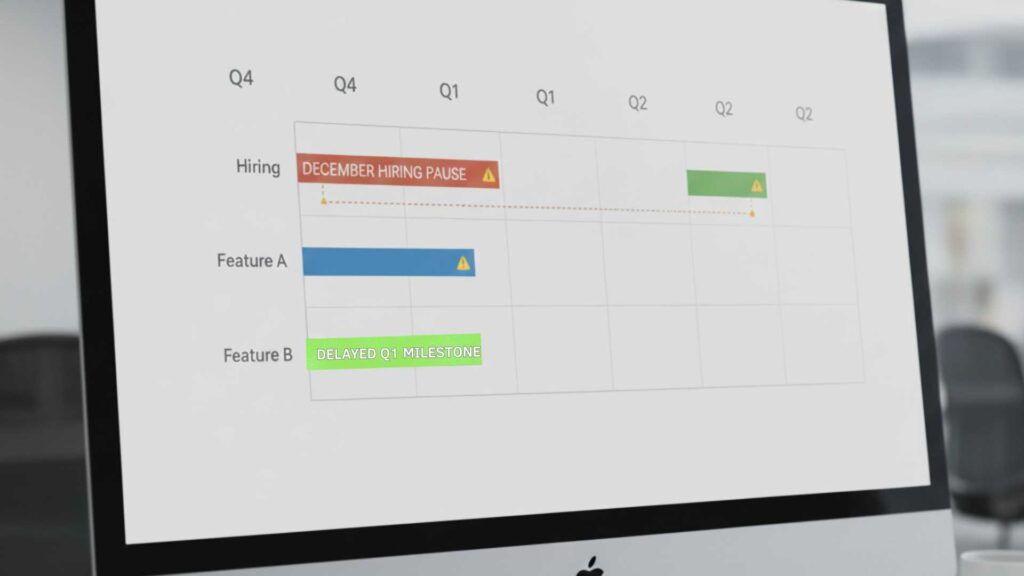
Unlike other functions, engineering output cannot be recovered easily once momentum is lost. December hiring pauses push recovery well into Q2.
The Hidden Growth of Technical Debt
Technical debt rarely announces itself. It accumulates quietly during periods of understaffing.
When engineering teams operate below capacity, decisions favour speed over structure. Code quality slips. Workarounds replace fixes. These shortcuts save time in December but cost weeks later.
Holiday hiring delays increase this risk. Without incoming engineers or planned backfill, teams stretch further than intended. By the time new hires join, they inherit complexity instead of clean systems.
This debt directly affects onboarding speed, retention, and delivery confidence.
Long Notice Periods Turn Pauses Into Long-Term Gaps
Senior engineers and platform specialists rarely move quickly. Notice periods of three to six months are common across fintech.
A December pause means first conversations start in January. Offers land in February. Start dates drift into late spring or summer. What felt like a short delay becomes a half-year gap.
This timeline mismatch often surprises leadership teams, especially those planning Q1 product launches or infrastructure upgrades. Early engagement avoids this compression.
Burnout Is the Most Expensive Outcome
Burnout rarely appears on balance sheets, but it is one of the highest costs of delayed hiring.
Existing engineers compensate for vacancies by working longer hours and carrying broader responsibility. This pressure erodes morale and increases attrition risk at precisely the wrong time.
Replacing a burned-out senior engineer costs far more than hiring proactively. Holiday delays often trade short-term convenience for long-term instability.
Retention suffers not because people leave suddenly, but because they quietly decide not to stay.
Why January Hiring Rarely Fixes the Problem
January brings competition, not relief.
As hiring restarts, fintech teams compete with refreshed budgets, aggressive timelines, and louder outreach. Candidate response rates drop. Salary expectations rise. Interview schedules stretch.
Engineering leaders then face a double burden: managing delivery while accelerating hiring decisions. This is when mis-hires occur, driven by urgency rather than alignment.
Delaying in December shifts pressure forward rather than removing it.
How Structured Hiring Reduces Risk
Holiday periods reward structure over speed.
Retained search allows fintech teams to engage senior engineers discreetly while competitors pause. Behavioural benchmarking clarifies what success looks like inside your engineering teams, not just on paper.
Psychometric assessments add depth when interviews are spread across weeks rather than rushed days. Together, these tools maintain hiring quality even when activity is quieter.
December becomes a preparation phase rather than a dead zone.
Contract Engineering as a Strategic Safeguard
When permanent hires cannot start immediately, contract recruitment protects delivery without long-term compromise.
Short-term engineering support absorbs pressure, stabilises sprint velocity, and prevents technical shortcuts. This flexibility is most effective when planned in advance, not deployed reactively in January.
Fintech teams that plan December hiring holistically avoid forcing permanent decisions under time pressure.
The Real Cost Is Lost Momentum
The true cost of delaying engineering hires is not a vacant role. It is lost momentum.
Roadmaps slip. Teams fatigue. Technical debt grows. By the time hiring resumes, recovery takes longer than expected. December decisions quietly shape Q1 outcomes.
Fintech firms that treat December as a strategic hiring window protect delivery, retention, and leadership focus.
Protect Your Q1 Delivery Before Hiring Delays Escalate
If your engineering roadmap depends on critical hires, pausing in December increases risk across Q1 and beyond.
Rec2Tech supports fintech teams through retained search, behavioural benchmarking, psychometric assessment, and contract recruitment to keep delivery moving without compromise.
Protect your Q1 roadmap. Speak to our team now and secure engineering talent before holiday delays turn into long-term gaps.