Fintech hiring models are under more scrutiny than ever in 2026. Growth expectations are higher, margins are tighter, and tolerance for mis-hires is low. Against that backdrop, many leadership teams are reassessing how they recruit senior technical talent.
The debate between retained search and contingent hiring is not new. What has changed is the cost of getting it wrong. In fintech, the wrong hiring model can stall delivery, damage morale, and erode investor confidence.
Choosing between retained and contingent recruitment is not about preference. It is about fit for purpose.
Why Hiring Models Matter More in Fintech
Fintech hiring is not transactional. Roles sit at the intersection of technology, regulation, and growth pressure. Senior engineers, architects, and technical leaders influence far more than code quality.
When hiring models focus purely on speed or volume, they miss the nuance fintech roles require. This is where contingent hiring often struggles.
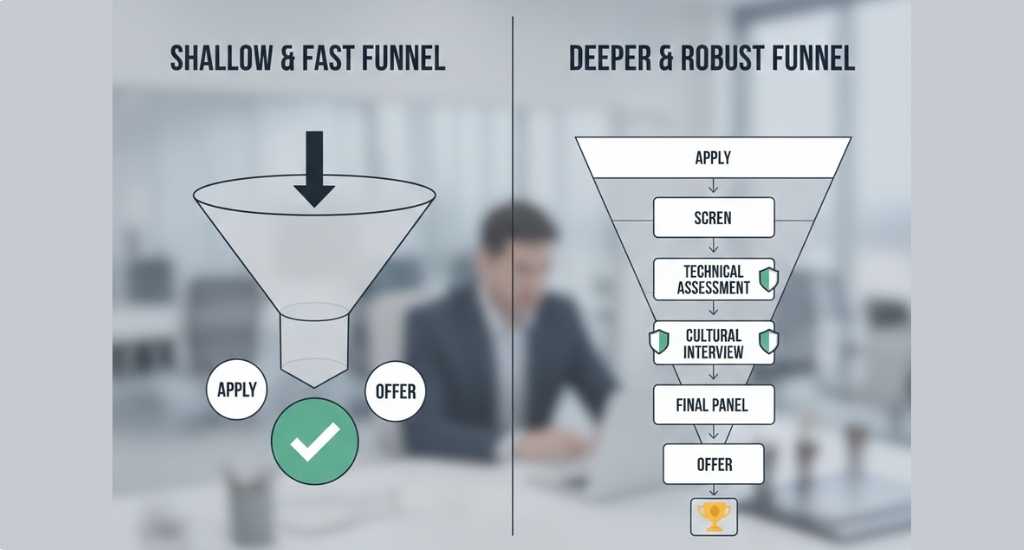
In contrast, retained search is designed for complexity. It prioritises depth of assessment, role alignment, and long-term performance rather than rapid CV delivery.
In 2026, this distinction matters more than ever.
How Contingent Hiring Typically Operates
Contingent hiring works on a success-fee basis. Agencies compete to fill roles quickly. Speed and candidate flow are the primary levers.
This model works well for high-volume or clearly defined roles where risk is low and onboarding is straightforward. In fintech, those conditions are rare at senior level.
Contingent recruiters often rely on surface-level screening. CVs are prioritised. Interviews focus on availability rather than behavioural fit. Little time is spent challenging role scope or growth expectations.
The result is a fast shortlist that looks strong but carries hidden risk.
The Limitations of Contingent Hiring for Senior Fintech Roles
For senior fintech roles, contingent hiring introduces several problems.
First, incentives are misaligned. Recruiters are rewarded for placement, not retention. Once a hire starts, responsibility ends.
Second, role clarity suffers. Job briefs are rarely challenged. If expectations are unrealistic or contradictory, they pass straight through to candidates.
Third, assessment depth is limited. Behaviour under pressure, decision-making style, and leadership maturity are difficult to evaluate in rushed processes.
These gaps often surface months later, when replacement is expensive and disruptive.
What Retained Search Does Differently
Retained search operates on partnership rather than competition.
The recruiter is engaged exclusively and invested in outcome, not speed alone. Time is spent upfront understanding the business, the team, and the role’s impact on delivery.
In fintech, this means aligning hires with funding stage, regulatory exposure, and growth trajectory.
Assessment goes beyond CVs. Behavioural benchmarking, structured interviews, and role-specific evaluation reduce reliance on intuition.
This approach slows the start of the process but accelerates success later.
Why Retained Search Fits Fintech in 2026
Fintech environments in 2026 are less forgiving.
Remote and hybrid work complicate onboarding. Cross-border teams add communication risk. Regulatory expectations continue to rise.
In this context, senior hires must operate independently, communicate clearly, and own outcomes from day one.
Retained search supports this by filtering for capability and behaviour, not just experience.
This is why fintech teams increasingly reserve contingent hiring for lower-risk roles and use retained models for leadership, architecture, and critical engineering positions.
Cost Comparison: Short-Term vs Long-Term
Contingent hiring often appears cheaper upfront. Fees are paid only on success. Retained search requires commitment before results.
This framing is misleading.
The cost of a senior fintech mis-hire includes lost delivery time, team disruption, replacement fees, and opportunity cost. When these are considered, retained search often delivers lower total cost.
January and Q1 amplify this effect. Early mis-hires derail plans that cannot be recovered easily later in the year.
Fintech leaders focused on long-term value increasingly see retained search as risk management, not premium spend.
When Contingent Hiring Still Makes Sense
Contingent hiring is not obsolete.
It works well for roles with clear scope, minimal leadership responsibility, and low dependency risk. Short-term contract needs can also suit contingent models when requirements are stable.
The key is segmentation. Treating all roles the same leads to avoidable failure.
Strong fintech hiring strategies use both models deliberately rather than defaulting to one.
Why Behavioural Alignment Is the Deciding Factor
The real difference between retained and contingent hiring lies in behavioural alignment.
Senior fintech roles demand judgement under uncertainty. How someone reacts when priorities conflict matters more than how many tools they know.
Retained search allows time and structure to assess this properly.
This is often where specialist partners like Rec2Tech add value by reframing senior roles around delivery impact and long-term retention rather than surface-level credentials.
Making the Right Choice for Your Team
Choosing the right hiring model starts with an honest question.
What happens if this hire fails?
If the answer involves delayed funding, regulatory exposure, or delivery breakdown, contingent hiring is rarely the right choice.
If the risk is contained and the role is easily replaceable, speed may matter more.
In 2026 fintech hiring, clarity beats habit.
What to Do Next
Hiring models shape outcomes long after roles are filled.
If your fintech team is planning senior hires this year, now is the moment to align recruitment approaches with business risk. Retained search is not about hiring slowly. It is about hiring deliberately.
If you want to explore whether retained search fintech recruitment fits your growth plans, reach out to Rec2Tech about a hiring model designed for complex, high-stakes roles.