Funding rounds change everything for fintech teams. Headcount grows, expectations sharpen, and delivery becomes visible to more stakeholders at once. What once worked for a small, tight-knit engineering group often breaks as soon as growth capital arrives.
This is why fintech hiring for funding rounds requires a different mindset. The goal is not just to scale faster, but to build teams that remain effective as pressure, scrutiny, and complexity increase.
Many fintechs underestimate how brutally funding stages expose weak hiring decisions. Roles that felt “good enough” pre-round become bottlenecks post-round. Processes strain. People struggle. Momentum slips at exactly the wrong moment.
Why Funding Rounds Reveal Hiring Weaknesses
Before funding, teams operate informally. Decisions are quick. Engineers wear multiple hats. Delivery relies on trust and proximity.
After funding, everything formalises. Roadmaps are scrutinised. Investors expect predictability. Delivery metrics start to matter.
This transition exposes gaps in capability and structure. Engineers who thrive in flexible environments may struggle with scale. Leaders hired for speed may lack experience in stabilising systems under growth pressure.
Funding does not create these issues. It reveals them.
The Most Common Hiring Mistake Before Growth
One of the biggest errors fintech teams make is hiring for the present rather than the next stage.
A senior engineer who excels in a 15-person startup may struggle in a 60-person organisation. A tech lead who thrives in hands-on delivery may falter when coordination and delegation become critical.
Hiring for funding rounds means anticipating what the role will become, not just what it is today.
January and Q1 are often when these hires are made, which is why early-year decisions carry such weight through the rest of the growth cycle.
How Team Design Changes Across Funding Stages
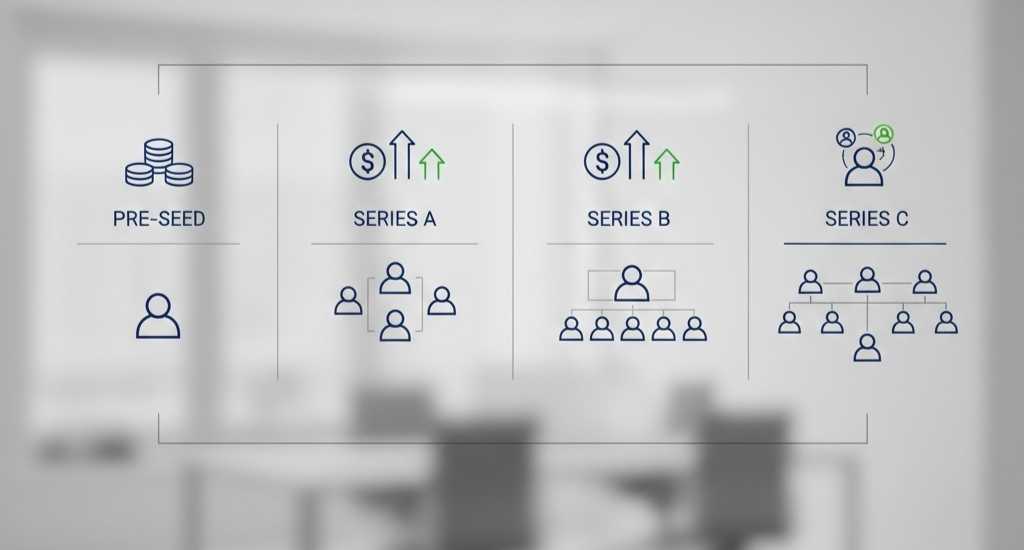
At Seed or early Series A, speed matters most. Engineers need autonomy and range. The process is light.
By Series B, stability becomes critical. Systems scale. Compliance deepens. Coordination across teams increases.
At later stages, leadership capability becomes the bottleneck. Clear ownership, decision-making discipline, and delivery forecasting separate strong teams from fragile ones.
Hiring strategies must evolve alongside these shifts. Treating every stage the same leads to misalignment.
Why “More Engineers” Is Rarely the Answer
When funding lands, the instinct is to hire quickly across multiple roles.
This often backfires.
Without strong senior hires who can design systems, mentor others, and create structure, adding headcount increases complexity rather than capacity. Delivery slows as communication overhead grows.
Growth-stage fintech teams need leverage roles first. People who make others more effective.
This is why hiring order matters as much as hiring volume.
Behaviour Under Growth Pressure Matters Most
Funding rounds increase pressure, not just workload.
Engineers face tighter deadlines, more stakeholders, and higher stakes. Behaviour under pressure becomes the defining factor in performance.
Some individuals retreat into narrow scope. Others over-control. A few rise to the challenge and create clarity.
Traditional hiring methods struggle to predict these responses. CVs and technical tests capture experience, not operating style.
This is why fintech hiring for funding rounds must assess how candidates prioritise, communicate risk, and make trade-offs when conditions change.
Midway through planning growth-stage hiring, many teams turn to specialists like Rec2Tech to align role expectations with upcoming funding demands and reduce the risk of early-stage hires failing post-round.
The Risk of Leadership Gaps After Funding
Funding rounds amplify leadership gaps quickly.
Engineering managers without experience scaling teams struggle with delegation. Architects without exposure to growth trade-offs over-engineer. Senior engineers without mentoring skills become bottlenecks.
These gaps create hidden drag. Teams appear busy, but progress slows. Frustration builds as expectations rise faster than capability.
Addressing leadership depth early prevents costly restructuring later.
Hiring With Retention Across Funding Cycles in Mind
Retention becomes harder as teams grow.
Early hires may feel displaced. New hires may feel overwhelmed. Without clear progression paths, motivation dips.
Hiring for funding rounds means selecting people who can evolve with the organisation. Adaptability, learning mindset, and communication skills matter as much as technical strength.
Retention across funding cycles protects knowledge and stability. It also reduces the need for reactive hiring when delivery pressure is highest.
How Strong Fintech Teams Prepare Before Hiring
Strong teams prepare before roles go live.
They map how delivery will change post-funding. They identify decision points that will move from informal to formal. They clarify where ownership must sit as complexity increases.
This preparation shapes better job scopes and more accurate assessment.
Hiring becomes a strategic tool, not a reaction to growth.
What Sustainable Growth Hiring Looks Like
Sustainable fintech hiring for funding rounds feels intentional.
Roles are defined against future needs. Interview processes test judgement and adaptability. Onboarding supports transition rather than assuming immediate performance.
Teams grow in capability, not just size.
Most importantly, delivery confidence improves as funding increases, rather than declining.
What to Do Next
Funding rounds should accelerate progress, not expose fragility.
If your fintech is preparing for growth capital, now is the time to assess whether your hiring approach supports the next stage or simply fills seats.
If you want to build a tech team that survives and thrives through funding stages, contact our professionals here at Rec2Tech about a hiring strategy designed for fintech growth under real scrutiny.