January feels like a fresh start, but for many fintech teams it is where hiring momentum stalls. Engineering roadmaps move forward while vacancies remain open, interview pipelines clog, and delivery pressure builds fast.
These bottlenecks are rarely caused by a lack of candidates. They are created earlier, through missed planning opportunities in December. When hiring waits for the new year, fintech teams enter Q1 already behind schedule.
Year-end planning does not mean filling roles immediately. It means removing friction before it appears, so Q1 hiring moves with intent rather than urgency.
Why Q1 Hiring Bottlenecks Happen Every Year
Q1 congestion follows a familiar pattern across fintech.
Budgets are approved late. Role scope is finalised under delivery pressure. Multiple teams compete for the same senior engineers once the market reopens. Candidates receive overlapping offers, timelines stretch, and decision quality slips.
Long notice periods compound the issue. Senior engineers, architects, and platform leads often need three to six months to transition. Starting conversations in January pushes start dates deep into the year.
By contrast, fintech teams that plan in December enter Q1 with clarity, alignment, and candidate interest already secured.
The Hidden Cost of Waiting Until January
Hiring delays rarely stay isolated to recruitment metrics. They affect delivery velocity, technical debt, and team morale.
Engineering teams compensate by overloading existing staff. Leaders split focus between hiring and delivery. Product timelines slip quietly, then publicly.
These costs rarely appear in hiring reports, but they show up in missed releases and frustrated investors. Year-end planning reduces these risks by addressing hiring as part of delivery strategy, not an afterthought.
What Effective Year-End Hiring Planning Looks Like
December planning is not about locking contracts. It is about removing uncertainty.
Strong fintech teams use this period to:
- Confirm which roles are critical for Q1 and which can wait
- Align stakeholders on scope, reporting lines, and success metrics
- Decide which roles require retained search versus contract support
- Prepare assessment frameworks before interviews begin
This preparation allows hiring to move cleanly once January arrives, without rushed decisions or shifting goalposts.
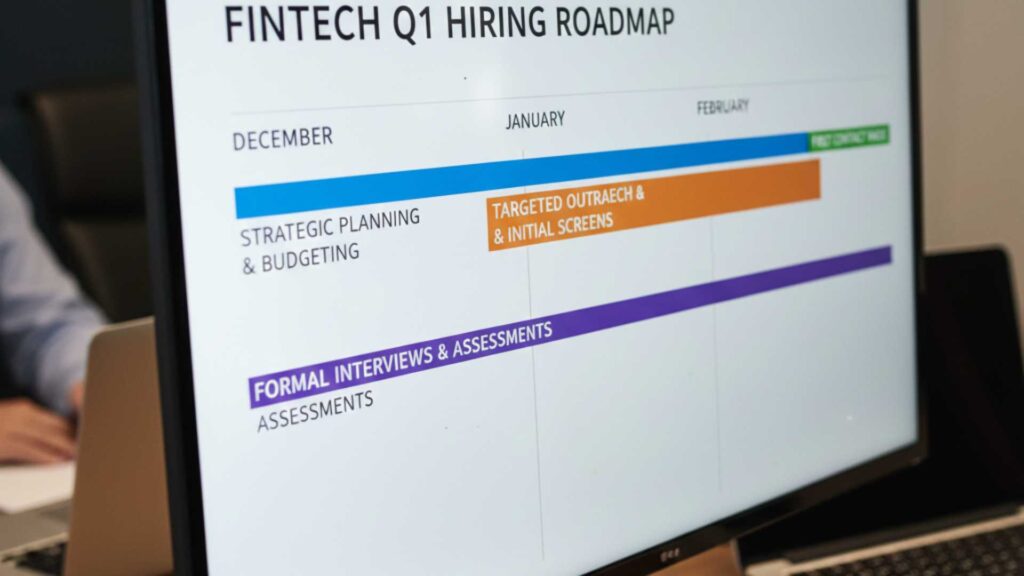
Why Retained Search Reduces Q1 Congestion
Transactional recruitment struggles during peak hiring periods. In Q1, inboxes flood, response rates drop, and candidate attention fragments.
Retained search changes the dynamic. It prioritises targeted outreach, senior-level engagement, and structured assessment rather than volume-driven shortlists.
For fintech teams facing delivery pressure, this approach:
- Secures candidate attention before market noise peaks
- Maintains consistent momentum through holidays
- Reduces drop-off caused by competing offers
This is particularly valuable for senior engineers and leadership hires where replacement costs are highest.
Behavioural Benchmarking Keeps Decisions Clean
When hiring accelerates in Q1, decision quality often suffers. Interview panels rush. Gut feel creeps in. Mis-hires happen quietly, then expensively.
Behavioural benchmarking protects against this. It defines what success actually looks like inside your fintech team, based on real performance patterns rather than generic competencies.
When paired with psychometric assessments, it adds objectivity at a time when hiring pressure is highest. This structure allows fintech leaders to move quickly without compromising alignment or retention.
Contract Hiring as a Pressure Release Valve
Not every Q1 gap requires a permanent hire. December planning clarifies where contract recruitment can stabilise delivery while permanent searches continue.
Short-term engineering support reduces burnout and protects roadmaps without forcing rushed permanent decisions. This flexibility is often missed when hiring starts reactively in January.
Fintech teams that plan early use contract talent strategically rather than defensively.
How This Protects Delivery and Retention
Year-end planning reduces Q1 hiring bottlenecks because it aligns people strategy with delivery reality.
Clear role definitions, early candidate engagement, and structured assessment frameworks shorten time-to-hire and improve retention. Teams start Q1 with confidence rather than contingency plans.
This approach is especially critical for fintech firms preparing funding activity, platform upgrades, or regulatory milestones early in the year.
What to Do Next
If your Q1 roadmap depends on critical engineering or leadership hires, waiting until January increases risk and cost.
Rec2Tech helps fintech teams remove Q1 hiring bottlenecks through retained search, behavioural benchmarking, psychometric assessment, and targeted contract support.
Book a year-end hiring audit today and enter Q1 with your hiring pipeline already moving.