January feels like a clean slate. New budgets, new goals, fresh headcount approvals. For fintech leaders, it is also the month where pressure quietly stacks up. Roadmaps are locked. Investors expect progress. Delivery dates suddenly feel very close.
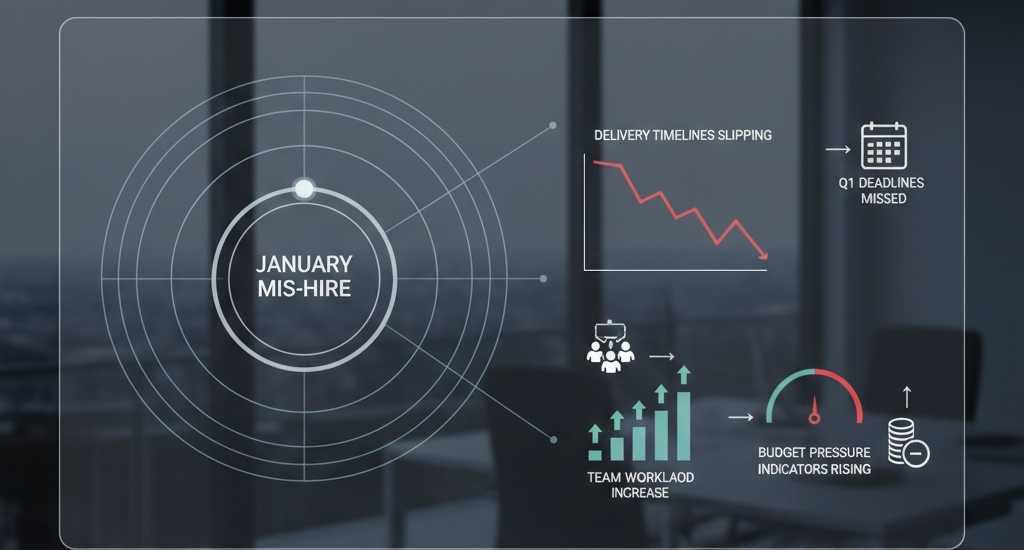
This is why January tech hiring mistakes cost more than at any other point in the year. When a hire goes wrong now, there is no spare runway to absorb it. The impact shows up fast in missed deadlines, team strain, and burn rate creep.
Early-year hiring decisions shape the entire year ahead. Yet January is also when many fintech teams rush roles to market without fully stress-testing what they need or how candidates will perform once the pace accelerates.
Why January Amplifies Hiring Risk in Fintech
January hiring is not just “business as usual” with a new calendar. It carries structural risks that do not exist later in the year.
Budgets are released with expectations attached. Funding milestones are already pencilled in. Product launches planned in Q2 or Q3 depend on decisions made now. When the wrong engineer or leader is hired in January, the damage compounds month after month.
Fintech adds an extra layer of complexity. Regulatory delivery, platform stability, and data security are non-negotiable. A weak hire does not just slow velocity. It increases operational and compliance risk.
Think of January hiring like pouring concrete in winter. If the mix is wrong, it does not crack immediately. The fault lines appear later, when pressure is applied.
The Most Common January Tech Hiring Mistakes
January hiring mistakes are rarely dramatic. They are subtle, logical decisions that feel reasonable at the time.
One of the most common errors is over-prioritising speed. After year-end delays and holiday slowdowns, teams want momentum. Roles are scoped quickly, interviews are condensed, and offers are pushed through to “get someone in the seat”.
Speed without precision is expensive. A fast hire who lacks delivery judgement or stakeholder maturity creates drag across the whole team.
Another frequent mistake is recycling last year’s job description. Fintech organisations evolve quickly. A role that worked at Series A often fails at Series B. Headcount plans change, but job specs lag behind reality.
There is also a tendency to hire for technical depth alone. January candidates often look impressive on paper. Strong CVs, recognisable employers, clean career progression. Yet fintech success depends heavily on behavioural traits like decision-making under pressure, ownership, and risk awareness.
When those traits are not assessed, early exits become more likely.
Why January Mis-Hires Hurt More Than Later in the Year
A mis-hire in June is painful. A mis-hire in January is destabilising.
Early-year hires are expected to ramp quickly and set the tone. Teams rely on them to unblock work, mentor others, and stabilise delivery. When that does not happen, existing engineers absorb the slack.
This leads to fatigue by Q2. Senior engineers start questioning leadership decisions. Managers spend more time fixing issues than planning. Delivery confidence erodes.
From a financial perspective, January mis-hires consume a budget that was meant to fuel growth. Replacement hires are harder to justify later in the year, especially if delivery has already slipped.
There is also a reputational cost. Candidates talk. In competitive fintech talent markets across the UK, Europe, and GCC, repeated early-year churn damages employer credibility.
The Hidden Cost of “Good Enough” January Hiring
Many January hiring decisions are made on a “good enough” basis. The role needs filling. The candidate meets most criteria. The team likes them.
This mindset works in low-risk environments. Fintech is not one of them.
A “good enough” senior engineer who avoids ownership, hesitates under ambiguity, or struggles with cross-functional pressure slows everything around them. Meetings run longer. Decisions stall. Junior engineers lack direction.
Over time, the team compensates. Productivity looks stable on the surface, but momentum is gone.
This is why the true cost of January tech hiring mistakes is rarely visible in month one. It shows up later, when teams should be accelerating but are instead managing friction.
Why Traditional Screening Falls Short in January
January is peak CV traffic season. Many candidates are testing the market after bonuses, promotions, or end-of-year reflection. On paper, the talent pool looks strong.
The problem is that CVs are retrospective. They describe where someone has been, not how they will perform in a new environment with new pressures.
Fintech hiring in January requires forward-looking assessment. How does this person handle incomplete information? How do they respond when delivery and compliance clash? How do they behave when funding expectations tighten?
This is where many fintech teams struggle. Interviews focus on technical recall rather than behavioural patterns. Reference checks confirm employment dates rather than delivery impact.
Midway through the hiring process, this is often where specialist partners like Rec2Tech are brought in to recalibrate role expectations and assessment depth, especially when early shortlists feel impressive but misaligned.
January Is When Misalignment Is Most Expensive
Misalignment is the common thread behind most January hiring failures.
- Misalignment between role and growth stage.
- Misalignment between leadership expectations and candidate reality.
- Misalignment between speed of hire and depth of assessment.
In fintech, alignment matters more than raw skill. A technically excellent engineer who cannot adapt to regulatory change or shifting priorities becomes a blocker.
January magnifies misalignment because there is no time buffer. Teams need hires who can operate independently, challenge assumptions, and own outcomes from day one.
How Fintech Leaders Reduce January Hiring Risk
Reducing January hiring risk starts with slowing down the right parts of the process.
Clarify what success looks like by June, not just on day one. Define the decisions this role will own, not just the tools they will use. Pressure-test behavioural expectations during interviews.
It also means being honest about what the role is not. Over-selling growth or underplaying complexity leads to early exits.
Specialist hiring approaches help here. Behavioural benchmarking, structured role assessment, and data-led shortlisting reduce reliance on gut feel. They also create consistency across interview panels, which is critical when teams are moving fast.
Most importantly, leaders should treat January hires as long-term investments, not short-term fixes. The goal is stability through funding cycles, not quick wins.
What Strong January Hiring Looks Like in Practice
Strong January hiring feels calm, not rushed.
Roles are clearly defined against business outcomes. Interview stages are purposeful. Candidates understand the realities of the environment before accepting offers.
When done well, January hires become anchors. They raise standards, reduce management load, and increase delivery confidence. Teams move faster because fewer things break.
This is the difference between hiring to fill seats and hiring to protect momentum.
What to Do Next
January will always bring hiring pressure. The difference between teams that struggle and teams that scale is how they manage risk at the start of the year.
If your fintech roadmap depends on getting early hires right, now is the time to review how those decisions are made. A more deliberate approach in January saves months of recovery later. If you want to reduce January tech hiring mistakes and build teams that hold up under real pressure, speak with Rec2Tech about a more structured, risk-aware hiring strategy built for fintech growth.